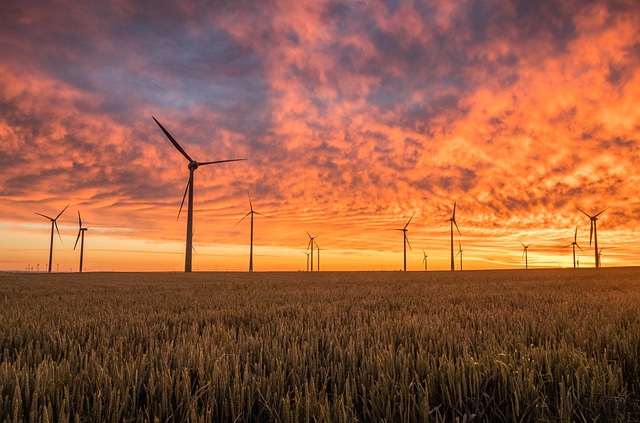
Artificial Intelligence Revolutionizes the Efficiency of Renewable Energies
The global transition to renewable energies is accelerating to combat climate change and ensure sustainable energy production. However, the massive integration of sources like solar and wind power poses major challenges. Their variable and unpredictable production disrupts the stability of electrical grids and complicates supply and demand management. Artificial intelligence is emerging as a key tool to overcome these obstacles.
Thanks to advanced techniques such as machine learning and neural networks, artificial intelligence enables the analysis of complex data to accurately predict energy production. For example, it improves solar and wind production forecasts by accounting for weather conditions and seasonal variations. These more reliable forecasts help better plan electricity distribution and reduce operational costs.
Artificial intelligence also optimizes the management of smart electrical grids. It allows real-time adjustments to production, storage, and energy consumption based on needs. In microgrids, it coordinates different energy sources to maintain a balance between supply and demand, even in decentralized environments. This strengthens system resilience and limits energy losses.
Another area where artificial intelligence is proving its worth is predictive maintenance. By continuously analyzing data from sensors installed on equipment, it detects early signs of failures. This proactive approach prevents unexpected downtime, extends the lifespan of installations, and reduces maintenance costs. Wind turbines and solar panels, often subjected to harsh conditions, particularly benefit from this technology.
However, these advancements heavily depend on the quality of the available data. Incomplete or noisy information can distort predictions and limit the effectiveness of models. Additionally, artificial intelligence systems must adapt to the physical constraints of grids, such as storage capacity or infrastructure resistance.
The challenges do not end there. Cybersecurity is becoming an increasing concern, as smart, connected, and data-dependent grids are vulnerable to attacks. Protecting these systems against intrusions and manipulations is essential to ensure their reliability. Furthermore, the large-scale deployment of artificial intelligence faces technical limitations, such as computational complexity or the lack of clear regulatory standards.
Despite these obstacles, solutions are emerging. Edge AI, or artificial intelligence at the network edge, allows data to be processed locally, thereby reducing delays and communication needs. Hybrid models, combining artificial intelligence and physical knowledge, improve the robustness and interpretability of systems. Finally, smart microgrids, coupled with artificial intelligence, offer more autonomous and adaptive energy management, ideal for remote areas or those prone to outages.
Case studies already show concrete results. In wind farms, artificial intelligence optimizes turbine orientation to capture more energy while reducing mechanical wear. For solar power, it reduces forecasting errors by 15 to 35%, enabling better grid integration. These improvements result in more stable production and lower costs.
Artificial intelligence is thus gradually transforming the renewable energy landscape. Its potential lies in its ability to integrate with existing infrastructures, adapt to real-world constraints, and evolve with the system’s needs. Its future success will depend on collaboration between researchers, industry players, and policymakers to overcome technical, regulatory, and operational challenges.
About Our Sources
Cited Study
DOI: https://doi.org/10.1186/s40807-026-00253-8
Title: Smart renewable energy systems: the role of artificial intelligence in enhancing efficiency and reliability
Journal: Sustainable Energy Research
Publisher: Springer Science and Business Media LLC
Authors: Afam Uzorka; David Kibirige; David Makumbi